
Want to easily achieve your ideal hair color at home without damaging your hair? Using hair dye at home isn’t as complicated as you might think. By mastering a few key steps, from choosing the right hair dye to post-dye care, you can create professional-looking results. This article will guide you step-by-step through how to safely and effectively dye your hair at home, leaving your hair with both color and healthy shine.
Why choose to use Hair Dye at home?
Many people ask, “Why not just go to a salon?” Actually, dyeing your hair at home has several significant advantages:
- Save on costs and time.
Going to the hair salon for hair dyeing is not only expensive but also requires squeezing in time and waiting in line. Using hair dye at home, you can do it on your days off, giving you complete control over your schedule. - with controllable hair color
, or try a trendy color for a short time? You can do it at home and adjust it anytime without worrying about salon appointment restrictions. - hair
, you can gain a more intuitive understanding of how your hair reacts to the dye, allowing you to prepare for subsequent care.
Of course, it’s important to note that hair dyeing isn’t entirely risk-free. Hair dye can irritate the hair cuticle, and improper application can lead to dry or brittle hair. Therefore, choosing a suitable hair dye and mastering the dyeing process and aftercare methods is the most responsible approach to protecting your hair.
How to choose the right hair dye for yourself
Choosing hair dye is not as simple as just picking a color. The type of hair dye, the shade, and its suitability for your hair type are all key factors.
Common hair dye types
- Permanent hair dye
offers long-lasting color results and is suitable for those who want a complete change in hair color. However, it’s important to note that its strong chemical components can irritate the hair and scalp. - Semi-permanent hair dye
is suitable for people who are trying hair dyeing for the first time or want to change their color in a short period of time. It is usually gentle on the hair, and the color lasts for about 4–6 weeks. - Plant-based or ammonia-free hair dyes
contain natural ingredients, are less irritating, and produce natural-looking colors, but have limited coverage and color options. They are suitable for people who prefer a low-damage, natural look.
Tips for choosing colors
Don’t choose a color that’s too different from your natural hair color
. If this is your first time dyeing your hair at home, it’s recommended to choose a shade that’s 1-2 shades lighter or darker than your original hair color. This will increase your chances of success and reduce the likelihood of an unnatural color difference.
Combining skin tone and temperament
- Cool-toned skin: gray, cool brown, or dark coffee colors are more suitable
- Warm-toned skin: chestnut, warm brown, or golden brown will look more natural.
For hair dyeing frequency
, it is recommended to dye the entire head of hair once every 6–8 weeks. Touch-ups at the roots can be done slightly more frequently, but it is still necessary to pay attention to the health of the hair.
Home hair dyeing procedure
Once you’ve chosen your hair dye and color, you can begin. The following steps are not only safe but also increase the success rate of the dyeing process.
Preparation
- Timing: It is best to dye your hair 24–48 hours after washing it. This allows the scalp’s protective oil layer to remain intact, resulting in a more even dyeing and less irritation.
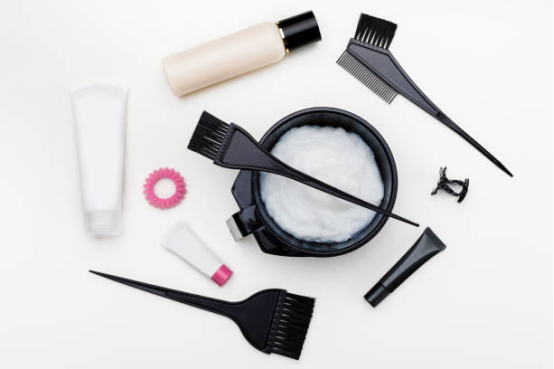
- Tools needed: gloves, old towels, plastic sheet, comb, hair clips, timer, etc. Make sure you have everything.
- Protect your skin: Apply petroleum jelly to your hairline, behind your ears, and forehead to prevent hair dye from staining your skin.
Testing phase
- Skin sensitivity test: Perform a small-area test behind the ear or on the inside of the arm 24–48 hours before dyeing to confirm that there is no allergic reaction.
- Hair strand test: Take a small strand of hair to test the dyeing effect and hair texture changes to ensure that the final color meets expectations.
Formal hair dyeing
- Sectioning: Divide the hair into four sections: front, back, left, and right, and secure them with clips.
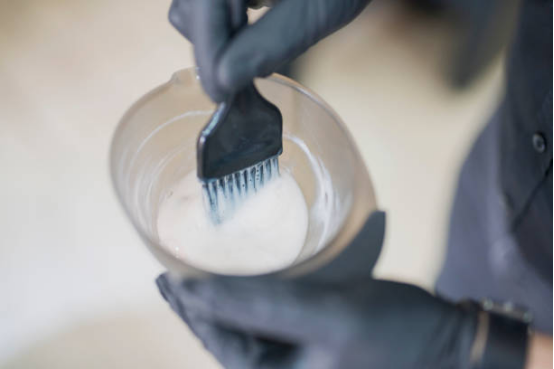
- Mixing hair dye: Strictly follow the instructions to mix color and developer.
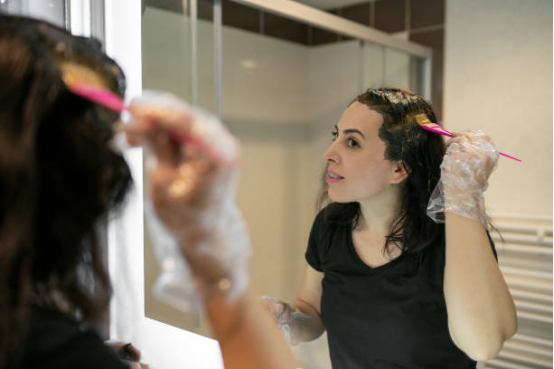
- Coloring order: Start from the mid-lengths to the ends, then apply to the roots. The roots are warmer and color faster; this order helps prevent the roots from getting too dark.
- Comb evenly: Use a wide-tooth comb to gently comb through the hair to ensure even coverage.
- Timing: Strictly follow the instructions for the specified time. Too long may damage the hair, while too short will affect the color saturation.
Rinsing and conditioning
- Rinse: Rinse with warm water until the water runs clear, avoiding hot water that could damage the hair cuticles.
- Color protection treatment: Color-protecting conditioner is usually included in hair dye boxes, and it is essential to use it after dyeing.
- Hair washing interval: It is recommended to wait 48–72 hours after dyeing your hair before washing it to allow the color to fully set.
Post-dyeing care techniques
Post-dyeing care determines whether the hair color lasts and whether the hair is healthy.
- color-protecting
shampoos and conditioners specifically designed for post-dyeing hair, and avoid products containing sulfates (SLS) to prolong the life of your hair color. - To minimize heat damage,
use heat tools such as hair dryers, curling irons, and straighteners as little as possible. If necessary, use heat-protecting sprays or hair serums. - Sunscreen and chlorine protection:
Sunlight, salt water, or chlorine in swimming pools can accelerate pigment loss. Wear a hat or use sunscreen hair care products when going out. - To control the frequency of hair dyeing,
it is recommended to dye your entire head of hair once every 6-8 weeks to avoid frequent processing that can cause hair fatigue.
Avoid common mistakes
- Pursuing a large color difference in one go, such as directly dyeing black hair silver-gray or gold, is prone to failure or damage to hair quality.
- Skipping patch tests or post-dye treatments: Skipping patch tests or post-dye treatments can increase the risk of allergies or cause uneven hair color.
- Washing your hair too quickly or styling it at high temperatures will accelerate color fading and dry out your hair.
- Frequent hair dyeing: Hair quality is significantly damaged and loses its shine.
Summarize
Home hair dyeing isn’t actually complicated, but the key to success lies in being steady, slow, and careful:
- Stable: Choose a suitable hair dye; the colors shouldn’t be too different.
- Slow: Do a test first, and adjust the hair color gradually.
- After dyeing, use color-protecting shampoo and conditioner, and control the frequency of shampooing and heat styling.
By mastering these principles, you can achieve your ideal hair color at home while maintaining healthy, shiny hair. Choosing the right hair dye and combining it with proper care will make your hair coloring experience both worry-free and professional.