
You may have noticed that not every hair dye application produces the ideal result as shown on the color chart. Some people achieve a shiny, youthful color immediately, while others experience a duller color that is more prone to fading. This isn’t accidental; it involves a combination of factors, including color science, hair structure, and the chemistry of hair dyes.
Mastering this knowledge will allow you to achieve your ideal hair color at home while maintaining healthy hair. This article will provide a detailed analysis of hair dyeing techniques, helping you achieve beautiful results and worry-free hair care.
Table of Contents
What determines hair color? — Pigment and hair texture
Hair color is not formed randomly; it is determined by melanin, a natural pigment in the cortex.
- In black or brown hair, melanin has a high concentration; erythroxin affects warm tones.
- Hair health and the integrity of the hair cuticle layer directly affect the uniformity and durability of dyeing.
- When using hair dye, the dye must penetrate the cuticle layer and alter the pigment within the cortex to create a new hair color. This process is not merely “coloring,” but a combination of chemical reaction and pigment replacement.
Tip: If your hair is dry or has been permed or dyed too much, doing a deep conditioning treatment before dyeing can significantly improve the shine after dyeing.
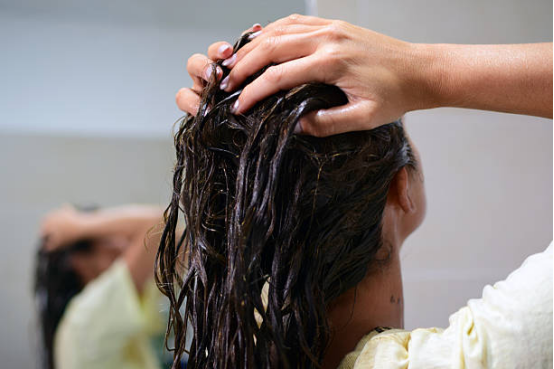
Types and Scientific Principles of Hair Dye
semi-permanent hair dye
- It contains no ammonia or color developer; the pigment mainly adheres to the surface of the hair cuticle.
- Suitable for short-term trials or color mixing; the color will gradually fade over several weeks after dyeing.
- It’s gentle on hair and can be tried on damaged hair, but the color doesn’t last.
Permanent hair dye
- Core steps: Open the scales → Fade color → Apply color → Lock in color.
- The chemical reaction destroys natural melanin, creating a “blank base” in the hair, which is then used to generate new macromolecular dyes to lock in the color.
- It has high durability, but it can irritate the hair and scalp, requiring proper application and care.
A little tip: Some people think that permanent hair dyeing must damage hair, but if done properly and with adequate pre-dyeing hair care, it can be done healthily.
Hair type suitability: Why do the same hair dyes produce different results?
Different people’s hair types and natural hair color will significantly affect the dyeing effect.
- naturally
dark hair a lighter color, you usually need to bleach it; otherwise, you won’t achieve the desired color. - of
the hair cuticle and the overall health of the hair affect color absorption and retention. Damaged hair absorbs color quickly, but it is more prone to fading and drying. - Differences in dye formulations
among different brands of hair dye, such as varying concentrations of ammonia, developer, and coupler, directly affect saturation and the naturalness of the color.
Practical experience: If it’s your first time dyeing your hair, choose a permanent dye that is close to your original hair color to reduce the chance of failure.
Home Hair Coloring Guide
Preliminary preparations
- Shampooing time: Dye your hair 24–48 hours after washing, as the oil layer will protect the scalp.
- Tools: gloves, old towel, plastic sheet, comb, clips, timer.
- Skin protection: Apply petroleum jelly to the hairline and behind the ears to prevent the dye from staining the skin.
Testing phase
- Skin test: Perform a small test on the back of the ear or arm 24–48 hours before dyeing.
- Hair strand test: Test for changes in color and hair texture in an inconspicuous area.
hair-dyeing process
- Divide the hair into four sections: front, back, left, and right.
- Mix color and developer as instructed.
- First apply the hair from the mid-lengths to the ends, then apply it to the roots, avoiding applying it too deep at the roots.
- Use a wide-tooth comb to comb evenly, and strictly follow the instructions for timing.
- Rinse with warm water, use color-protecting conditioner after dyeing, and wash your hair again after 48–72 hours.
Tip: When dyeing your hair, you can hum a song softly to relax and avoid uneven application due to shaky hands.
Post-dyeing care techniques
- Color-protecting shampoo and conditioner: Choose shampoo/conditioner specifically designed for post-dyeing to prolong color durability.
- Reduce heat damage: Use heat-insulating spray when blow-drying, curling, or straightening your hair to prevent damage.
- Sunscreen and chlorine protection: The color may fade due to sunlight, salt water, and pool water, so wear a hat when going out.
- Control the frequency of hair dyeing: It is recommended to dye your hair once every 6-8 weeks to avoid frequent damage to the hair.
Tip: If you experience slight dryness after dyeing, you can use a deep conditioning hair mask 1–2 times a week.
Common Misconceptions
- Pursuing a large color difference in one go can easily lead to failure or damage to hair.
- Skip the test/hair care → allergies or uneven hair color.
- Washing hair too quickly / styling at high temperatures → accelerates pigment loss.
- Too frequent use → Hair becomes fatigued and loses its shine.
Future Trends: Hair Dye Technology Development
Researchers are experimenting with combining gold nanoparticles with keratin to make the dye more stable and less prone to fading.
Although still in the research stage, this demonstrates that hair dyeing technology is constantly evolving and may become safer and longer-lasting in the future.
A small reflection: No matter how advanced the technology, it can’t compare to rational hair dyeing combined with good hair care habits.
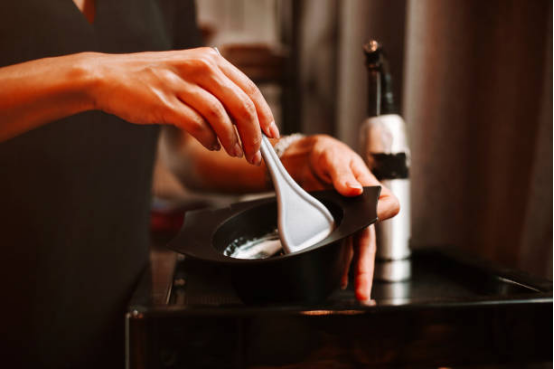
Summarize
- Understand the science of hair dye and match it to your hair type to choose the type of dye that best suits you.
- Permanent dye → Long-lasting color, requires hair care; Semi-permanent → Gentle to try, flexible colors.
- Hair type, natural pigment, and hair dyeing history all affect the results.
- Scientific hair care after coloring is key to long-lasting color and healthy hair.
Once you master this knowledge, you’ll be able to achieve beautiful hair dyeing, healthy hair, and safe operation.
Hair dyeing is not just about “applying color”; it’s a science and an art.