
When you pick up your hair dye, do you think, “Am I being too daring with this color change?” or “What if it doesn’t look good?” Choosing a hair dye solution that suits you is more important than blindly following trends. There are two common types of DIY hair dye on the market—temporary and permanent dyes, each with its own characteristics, suitable users, and aftercare needs. This article will help you find the most suitable hair dye solution for you by covering its principles, effects, applicable users, and practical DIY techniques.
Table of Contents
Differences between the two mainstream schemes
Temporary/semi-permanent hair coloring
Temporary dyes typically only cover the surface of the hair strands, and the color does not penetrate into the hair core, so they fade easily after a few washes. They come in various forms, including sprays, colored hair masks, shampoo-based hair dyes, and even colored hair waxes.
Semi-permanent hair dyeing is slightly stronger, but it is still considered a gentle method. Its dye molecules penetrate slightly into the superficial layers of the hair shaft without completely altering the natural pigment structure.
- Advantages: Minimal damage, suitable for beginners or temporary styling, allows for flexible color changes, low risk.
- Disadvantages: The color is not long-lasting, and the color effect may be limited on dark hair; it cannot completely cover gray hair or significantly change hair color.
Tip: If you want to try colored hair ends, a holiday party look, or just change your mood, temporary hair dye is the safest option.
Permanent hair dye
Permanent hair coloring allows dye molecules to penetrate the hair shaft and react chemically with natural pigments, resulting in a long-lasting and complete change in hair color. It can cover gray hair, lighten or darken hair color, and is suitable for full head coloring or changing one’s overall image.
- Advantages: Stable and long-lasting color, not easy to fade; suitable for people who need long-term results.
- Disadvantages: Strong chemical components (such as ammonia or oxidants) can irritate hair, and long-term use may cause hair to become dry.
A friendly reminder: While permanent hair dye lasts a long time, pre- and post-dye care is essential; otherwise, the results will be significantly diminished.
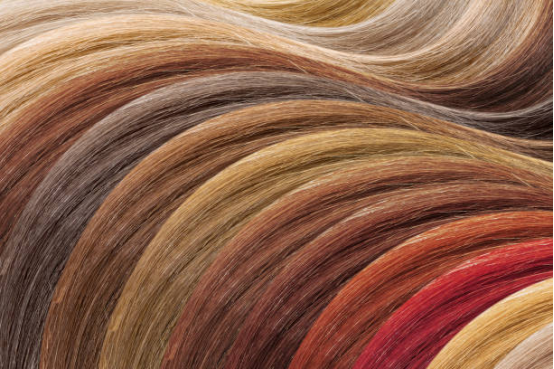
Which hair dye is suitable for whom?
choosing a DIY hair dye is to clearly define your goals and hair type.
Suitable for temporary/semi-permanent people
- Want to try a new hair color, change your hairstyle occasionally, or simply feel good about the changing seasons?
- Those with fragile hair or whose hair has been permed or dyed are afraid of damage;
- I want to try out the colors first, because I’m not sure if the new colors suit me.
- Hair roots grow easily, and color changes frequently.
In these situations, temporary hair dye is a flexible and low-risk option, making it an ideal choice.
Suitable for people who want to permanently dye their hair
- Want to completely change your hair color or adjust the brightness?
- Need to cover gray hair or unify hair color;
- I want to maintain my hair color long-term and don’t want to touch it up frequently.
- They can tolerate the stimulation of chemical components and are willing to invest in post-dyeing care.
Permanent hair dye requires high-quality hair; improper care can easily lead to dryness or frizz.
Safety Guidelines You Must Read Before DIY Hair Dye
Regardless of the hair coloring method chosen, safety should always be the top priority:
- Perform a skin sensitivity test, especially for permanent hair dyeing, to prevent allergies or irritation.
- Instructions: Strictly follow the proportions and time limits; do not arbitrarily extend the stay time.
- Try it on a small area first: especially for permanent hair coloring, try the color on a small section of hair or the roots first.
- Care preparation: Deep conditioning can be done before dyeing, and conditioner, hair masks, or special shampoo and conditioner for dyeing are essential after dyeing.
- Be aware of heat sources and environment: High-temperature styling, ultraviolet rays, or chlorine water will accelerate fading and affect hair quality.
Remember: DIY doesn’t mean “do it haphazardly.” Scientific operation and care are the keys to ensuring results.
DIY hair dye practical tips
- Temporary : Suitable for short-term changes and color testing. The color may fade quickly after shampooing. Before use, comb your hair evenly and apply the dye in sections. After dyeing, you can use conditioner to lock in the color.
- Permanent hair coloring: Suitable for long-term hair color changes, but requires strict control of the process time and dye ratio. A hair quality assessment is performed before coloring, and deep conditioning is done afterward.
- Hair dyeing tips: Apply color in sections to avoid uneven coloring; wear gloves during the process to avoid getting your skin dirty; rinse with cold water after dyeing to help close the hair cuticles and lock in the color.
Common Misconceptions
- Is it okay to wash your hair immediately after dyeing? — Wrong. The pigment hasn’t set yet, and washing your hair too early will affect its longevity.
- You can use any shampoo you like—regular shampoos can easily remove pigments, so you should use a special shampoo and conditioner after dyeing your hair.
- Does heat styling not affect hair color? — High temperatures can damage the hair cuticle and accelerate color fading, so heat-protecting spray is essential.
- It’s okay not to trim it—dryness and split ends can affect the overall color uniformity and hair health.
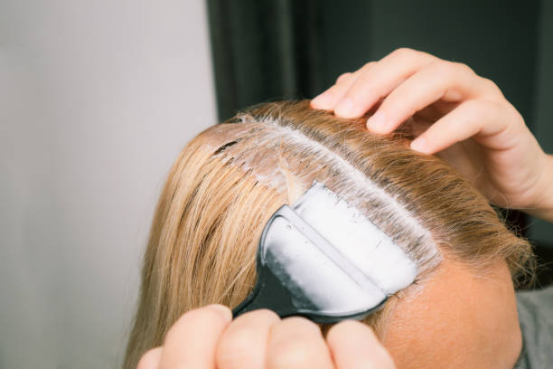
In summary: Choose the hair dye that best suits you.
There’s no absolute good or bad when it comes to DIY hair dyeing; there’s only the solution that suits you.
- Low-risk, flexible, temporary attempts → temporary/semi-permanent dye;
- Stable change, whitening, long-lasting → permanent dye;
- Safety and care: pre-dyeing testing, strict procedures, post-dyeing care, and attention to heat sources and environment.
When you have a clear goal, understand your hair type, and master the correct operation, DIY hair dye allows you to both play with colors and protect your hair, ultimately achieving your ideal look.