
In daily hair care, conditioner and hair dye are arguably the two most frequently used products. Surprisingly, however, they cannot be used interchangeably. Many people find that even when choosing the same brand and shade, different application methods of conditioner before and after dyeing result in inconsistent color, uneven color, or even faster fading. What chemical processes are at play here? Why does conditioner affect the performance of hair dye?
Conditioner and HairTable of Contents
hair coloring principles: How does hair dye penetrate the hair shaft?
To understand why conditioner can alter the effect of hair coloring, you first need to understand how hair dye works. Whether you’re using permanent, semi-permanent, or temporary dye , the core process involves hair breakage, pigment particle entry, and internal fixation.
Permanence: Dependent on the dual chemical reaction of ammonia and hydrogen peroxide.
Permanent typically includes:
- Ammonia: Increases pH and opens hair cuticles.
- Hydrogen peroxide: bleaching and oxidizing dyes
- PPD)Oxidized dye precursors (such as PPD): recombine within the hair shaft to form stable pigments.
The color is truly “locked in” only after the hair cuticles are opened and the hair dye ingredients penetrate the hair cortex.
Semi-permanent: Relies on osmosis rather than chemical reaction
Semi-permanent makeup does not contain ammonia and does not open the hair cuticles. It relies on pigment adhesion or partial penetration, making it more susceptible to the effects of surface care products.
:Temporary : Remains on the surface, making it more susceptible to the effects of conditioner.
-coloringTemporary colorings such as sprays and hair coloring waxes adhere completely to the outside of the hair strands, making them prone to fading, clumping, or failing to develop color when exposed to conditioner.
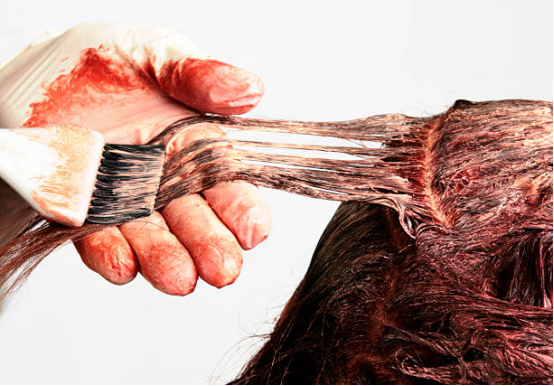
The core chemistry of conditioner: How does it “affect” hair dye?
The way conditioner alters the effect of hair dye is closely related to its typical formula. Most conditioners contain:
Cationic surfactants (such as BTMS) adsorb onto the hair surface, making the hair smooth.
- Silicone oil: forms a smooth protective film
- Moisturizers (such as glycerin): improve moisture and softness.
- Lipids (coconut oil, shea butter): occlusive components that reduce moisture loss.
The chemical behavior of these components can alter the surface charge, smoothness, and porosity of hair, thereby directly interfering with the penetration, adhesion, and reaction efficiency of hair dye.
The 3 Key Chemical Interference Mechanisms of Conditioner and Hair Dye
Cuticle closure effect: Conditioner reduces dye penetration
Most conditioners have a slightly acidic pH (around 4–5), and their function is
- Tighten the cuticles
- Reduce hair surface roughness
Hair dye requires the hair cuticles to open to penetrate (especially permanent dyes).
This leads to a classic conflict:
Using conditioner before dyeing → hair cuticles close → dye has difficulty penetrating → uneven dyeing or no color transfer
This is especially evident in the following situations:
- Use semi-permanent dye to lighten the base color
- Naturally coarse and hard hair with low porosity
- High-speed penetration is required when dyeing cool colors (blue, gray, and green).
Therefore, most professional barbers would recommend:
Do not use conditioner or oily hair care products 48 hours before hair coloring.
Silicone oil acts as a barrier, preventing dye adhesion.
Silicone oil is one of the key ingredients in hair conditioner, but it’s an obstacle for hair dye:
- Form a hydrophobic protective film
- Reduce direct contact between dye and hair.
- Reduce the rate of penetration
- Makes the staining lighter and more uneven.
In particular, Amodimethicone actively “adheres” to damaged areas, which are precisely the areas that need the most coloring, thus “protecting” these areas and making them more difficult to absorb dye.
This is the real experience of many users:
Why don’t the areas I bleached take color? — Because the conditioner leaves a protective layer of silicone oil.
Cationic adsorption: competing with dye ions
Many hair conditioners contain cationic conditioning agents, such as
- Behentrimonium Methosulfate (BTMS)
- Cetrimonium Chloride
These cationic components adhere tightly to the negatively charged surface of the hair strands, and many dye particles are also charged.
When the conditioner first “occupies” the surface, the dye cannot adhere.
The following products will be most significantly affected:
- Semi-permanent (relies on adhesion)
- Acid permanent dyes
- Dyeing light hair color to dark color (e.g., dyeing blonde hair dark brown).
The final result is
- Uneven coloring
- The dye is “stuck on the surface.”
- The color faded after two washes.
by hair coloring type: The impact of conditioner on different hair dyes
Permanent: The impact is moderate but still significant.
Permanent hair dye relies on ammonia to open the hair cuticles, so the barrier effect of conditioner is partially offset, but it will still have some effect:
- Reduce color depth
- Reduces the ability to cover gray hair
- This can cause localized areas of the hair to become lighter in color (especially in hair that was already damaged).
Semi-permanent makeup: has the greatest impact
Almost all semi-permanent hair dye brands emphasize:
Do not use conditioner (especially leave-in conditioner) before dyeing your hair.
The reason is simple: it contains no ammonia, and its penetration relies entirely on the natural opening and closing of the hair cuticles and their affinity with the hair strands. The silicone oil and cationic compounds in conditioners would cause the dye to lose its adhesion points.
Temporary hair coloring products: 90% affected by conditioner
Because the temporary dye adheres completely to the surface, conditioner will cause:
- The pigment becomes indistinct
- It is prone to clumping
- In most cases, it will fall off with the slightest touch.
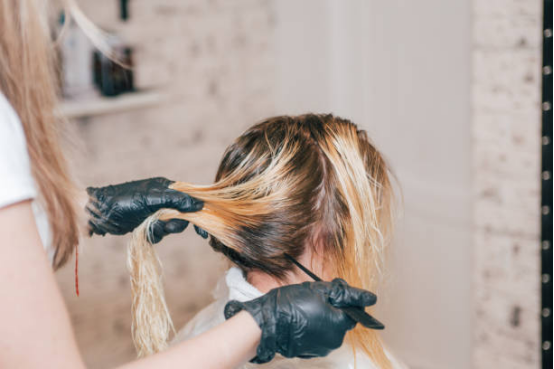
How should conditioner and hair dye be used together?
To avoid staining failure, the following practical procedure can be followed:
hair coloring (most crucial)
- Avoid using conditioner, hair masks, and oil treatments within 48 hours.
- You can gently wash your hair with silicone-free shampoo.
- Avoid using dry shampoo, hair-smoothing spray, or hair oil.
Purpose: To keep the hair cuticles in their natural state to facilitate dye penetration.
hair coloring day
- Do not apply conditioner.
- Do not use leave-on repair products.
- Don’t wash your scalp too thoroughly. A suitable amount of sebum can protect the scalp but won’t affect hair dye absorption.
After dyeing
Most hair coloring brands recommend using only water for the first rinse, without conditioner.
reason:
- The dye is still oxidizing and fixing inside the hair strand at this time.
- Conditioner can interfere with pigment stability
Best practice:
Wait 24–48 hours before using conditioner.
If you must use it on the same day, select:
- Silicon-free
- Low cationic components
- Conditioner specially designed for post-dyeing repair
Special case: Are there any conditioners that can enhance the effect of hair dye?
Yes, in some cases:
- Low-porosity hair
- Naturally coarse and stiff hair
- Curly hair
Using a small amount of conditioner (especially silicone-free ones) can help:
- Uniform surface
- Reduce the mottled appearance caused by dye “spots.”
However, it is important to note:
It can only be used 24 hours before shampooing before dyeing, not directly before dyeing.
If the timing is too close to hair coloring, it will still hinder penetration.
For more consistent hair coloring results: Professional advice
- If using semi-permanent makeup, make sure your hair is “clean and free of coating.”
- Use silicone-free shampoo
- Do not do any pretreatment before dyeing.
- Wait at least 48 hours after bleaching before doing a deep conditioning treatment.
- Avoid using hot tools for at least 2 days after infection.
- Always use conditioner with the “color-safe” label.
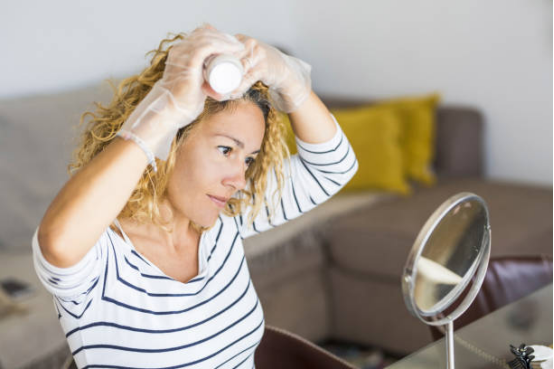
In conclusion, the relationship between conditioner and hair dye is a “chemical game.”
Conditioner is meant to make hair smooth and reduce friction, while hair dye is meant to penetrate the hair shaft. Since their functions are diametrically opposed, it’s not surprising that they can react chemically.
By understanding the effects of hair dye ingredients (silicone oil, cationic conditioners, acidic pH, etc.) on hair cuticles and dyes, and by arranging the correct order of application, you can maximize the effect of hair dye, resulting in purer and longer-lasting colors.