
?”Before trying any hair dye, the most important question to ask yourself is not “What color should I dye it?” but rather, “Is hair coloring suitable for my scalp ?”
It may sound a bit boring or even discouraging, but the truth is: no matter how good the color is or how beautiful the dyeing is, if your scalp is not suitable, the result may not be worth it at all.
,Many people get hair coloring for a styling effect or to improve their complexion and make themselves look more energetic. However, hair dye is not a skincare product; its ingredients are stronger, more direct, and more likely to irritate the skin. Many people are quite confident when they get their hair colored for the first time , but just one unpleasant reaction can leave a lasting impression.
Table of Contents
Why is it essential to determine if your scalp is suitable for hair dye before hair coloring?
Let’s set aside the reasons for now and start with a small fact:
almost all permanent hair dyes contain chemicals that can irritate the skin, such as ammonia, oxidants, and p-phenylenediamine, with darker shades typically containing even higher concentrations.
These ingredients are inherently quite “powerful”—they open up the hair cuticles to allow the color to penetrate, so they can put some pressure on the scalp. Some people have no problem with them, but others will feel a stinging sensation even from the slightest touch.
use.”In other words, hair dye is not a product that “anyone can use”.
In particular, the following situations:
- Sensitive scalp or eczema/damage
- Frequent itchy and dry scalp
- .I experienced stinging and redness after hair coloring .
- Frequent bleaching or perming recently has caused my scalp to become thinner.
- People with allergies
People in this group are at higher risk when using hair dye.
Therefore, determining whether your scalp is suitable for hair dye is essentially about avoiding unnecessary damage, not preventing you from becoming more beautiful.
II. How to determine if your scalp is “suitable for hair coloring”? — Several key signals
You don’t actually need to be a skin expert to roughly determine if it suits you. The following criteria are more like a practical “self-checklist,” which is very intuitive.
(1) Healthy scalp with no obvious problems
If you touch your scalp now, see if you experience any of the following:
- Redness, swelling, itching
- Large flakes of dandruff are falling off (like snowflakes, not just one or two flakes).
- Obvious wounds, damage
- Recurrent inflammation or rashes
If any of the above applies to you, it means your scalp is in an unstable state. In this case, hair coloring is like applying harsh chemicals to freshly sunburned skin—it will likely worsen the problem.
(2) Hair coloring used to be fine.
If you have dyed your hair before and have not experienced stinging, redness, or significant hair loss, then your skin is likely to be able to tolerate common hair dye ingredients.
However, there’s an easily overlooked point:
your constitution and skin condition can change.
Just because you didn’t have allergies last year doesn’t mean you definitely won’t this year.
(3) Stable hair quality and cuticle condition
Although we’re discussing the scalp, hair texture can also indirectly reflect whether you’re suitable for hair dyeing. For example:
- The hair strands are not easy to break
- The scales appear to be denser
- It doesn’t clump together much after washing.
- perming,The hair has not undergone continuous bleaching, perming or other high-intensity treatments.
If your hair is healthy, it usually means your scalp is also relatively stable. Conversely, if your hair is severely damaged, your scalp is often in a highly sensitive state.
(4) The plan is to use a milder type of hair dye.
If you intend to use:
- ammonia-free hair dye
- Low PPD formulation
- Semi-permanent, semi-transparent
- Coloring methods that do not touch the scalp (such as Balayage, highlights)
This will reduce scalp pressure significantly, making this type of hair coloring more suitable for most people.
III. What situations mean that “hair coloring is not suitable at the moment”?
you doIn the following situations, it is recommended that you: do not dye your hair.
(1) The scalp has inflammation, eczema, or lesions.
In this case, hair coloring is a “second attack” on the scalp, and hair dye can penetrate under the skin barrier more easily, amplifying the irritation.
(2) You have a history of allergy to hair dye.
I’ve ever used traditional hair dye.
- stinging
- Red rash
- swelling
- Skin peeling
- burning sensation
That almost certainly indicates that your skin is sensitive to the ingredients. Continuing hair coloring at this point carries a very high risk and is not recommended.
(3) Long-term scalp sensitivity, prone to dryness and itching
Some people experience scalp irritation even without
hair coloring . People with this condition often feel uncomfortable when using hair coloring, and the symptoms often appear after the coloring process, causing a strange feeling when washing their hair.
(4) You plan to use bleaching, strong oxidation, or dark hair dye.
.Hair bleach, strong oxidants High concentrations of these dyes are far more irritating to the scalp than regular hair dyes . People with poor scalp conditions will typically experience more severe reactions when using them.

IV. Three essential safety preparation steps before hair coloring
“Even if you seem “suitable for hair coloring,” these three steps are still necessary. They will help you further confirm whether your scalp is compatible with the hair dye.
1. Skin patch test (24–48 hours ago)
On a side note—many people skip patch testing because they find it “troublesome.” But it’s the most direct way to determine if you’re a good fit for hair dye.
You only need to:
- .Mix the hair dye according to the instructions .
- Apply a little behind the ear or on the inside of the arm.
- Observe the reaction after 24–48 hours.
If you experience redness, itching, rashes, or stinging, it’s safe to say that this product is not suitable for you.
By the way:
Even if you’ve used it safely before, you should retest it every time.
The formula may change, and your skin condition may change.
2. Choose a gentle hair coloring method whenever possible.
The following are more scalp-friendly:
- ammonia-free hair dye
- Semi-permanent, weak oxidizing agent
- Hair coloring methods that do not touch the scalp (highlights, hand-brushed coloring)
- low concentration oxidant
- Low PPD products
If you have a sensitive scalp, these should be your first choice.
3. Control the frequency of hair coloring
Most experts recommend:
- Hair coloring intervals should be at least 6–8 weeks.
- There should be at least a 2-week interval between bleaching and perming.
- Do not dye your hair immediately if it is already damaged.
- Because the scalp and hair need time to recover.
?5. How to determine if your scalp can “tough it out” after hair coloring ?
Some reactions don’t appear immediately during hair coloring , but rather slowly emerge 1-2 days after the coloring.
The following signs indicate that your scalp may not be suitable for your current hair dye:
- Stinging and burning sensations may occur within 24 hours after application.
- The scalp becomes noticeably red or develops small rashes.
- My hair feels “spicy” when I wash it.
- Dandruff increased several times over
- A sudden increase in hair loss
- Rough and brittle hair
- Uneven color absorption and abnormally rapid fading.
If these situations occur repeatedly, it indicates that:
/thisIt’s not that your scalp is unsuitable, but rather that this hair dye /this method of dyeing is unsuitable.
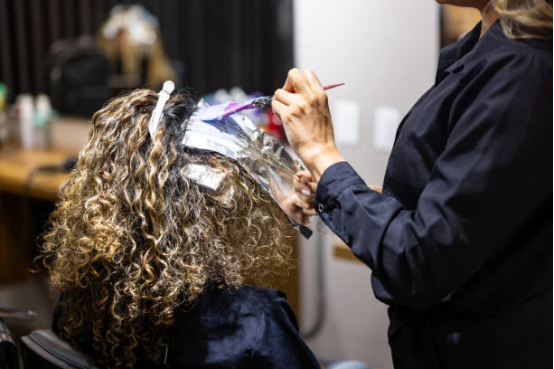
Whether hair coloring suits you or not ultimately depends on your scalp.
Hair coloring can certainly enhance one’s appearance, but beauty shouldn’t be built on enduring chemical irritants.
Many people believe the damage from hair coloring is immediate, but it’s often cumulative, only to suddenly manifest later. Therefore, to ensure you can confidently experiment with different colors in the future, determining beforehand whether your scalp is suitable for hair dye is a responsible approach.
If you find that hair coloring is not suitable for you at the moment after following the steps above, don’t be discouraged. There are many other relatively safe hair coloring methods on the market that do not come into contact with the scalp, and you can even use temporary coloring products, hair powder, wigs, etc. as a transition.